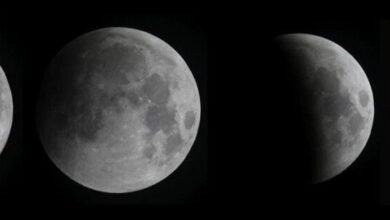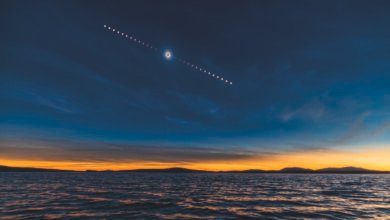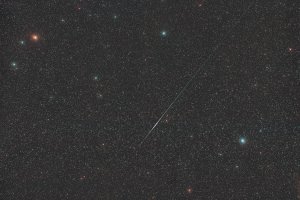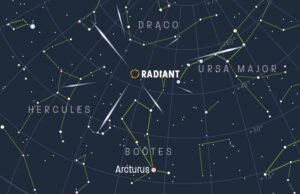
Skywatchers in the Northern Hemisphere have a busy stretch ahead from November 6 to 13, 2026. A New Moon on November 9 darkens the sky for deep-sky targets and a faint comet, while Venus, Jupiter’s moons and Saturn offer planetary highlights. The times and positions below are for observers at roughly 40° N, 90° W unless noted.
Venus, Spica and a thin Moon at dawn
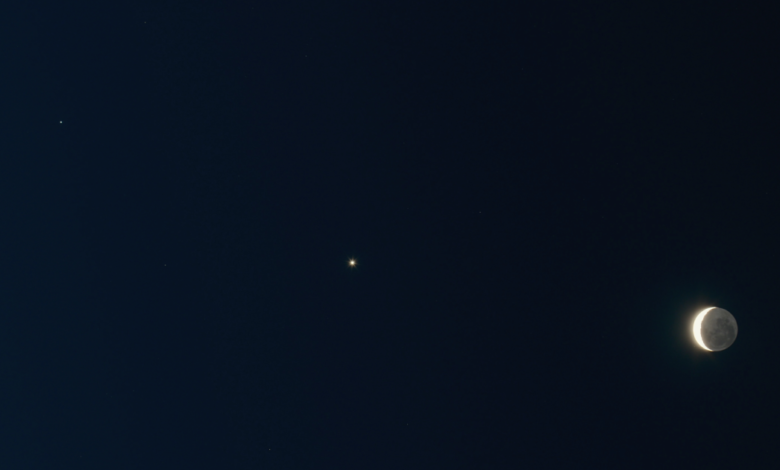
The planet’s week begins on November 7, when a slim waning crescent Moon passes 1.1° south of Venus at 7 A.M. EST. An hour before sunrise, the pair sits about 6° above the eastern horizon. Venus, at magnitude –4.5, lies to the upper left of the Moon, and earthshine should faintly light the Moon’s dark portion. Spica, in Virgo, shines at magnitude 1.0 and sits 1.3° northeast of Venus that morning.
Venus then reaches a stationary point in Virgo at 10 A.M. EST on November 11, ending its retrograde (westward) motion. It will move eastward against the stars and pass north of Spica. By then it has brightened to magnitude –4.7. In a telescope its disk is 53″ across but only 10% lit. Mercury may also be visible that morning, about 13° to Venus’s lower left and just 1.5° above the horizon at magnitude 1.2. Spotting it requires a flat, unobstructed horizon, and observers should stop using binoculars well before sunrise.
Jupiter’s moons and a comet
Early on November 8, Jupiter rises just under 5° northwest of Regulus, with Mars about 3° above it. Io’s shadow appears on the planet’s eastern limb at 1:29 A.M. EST. Europa re-emerges from behind Jupiter around 1:54 A.M., and Callisto begins its transit at 2:07 A.M. Io starts its own transit near 2:42 A.M. and overtakes Callisto within about half an hour. Io’s shadow leaves the western limb at 3:45 A.M. EST, and Callisto finishes its transit around 5:51 A.M. CST. Because of the timing, the event is better placed for observers farther east.
On November 9, the night of the New Moon (2:02 A.M. EST), Comet 161P/Hartley-IRAS is nearly 50° above the western horizon two hours after sunset. At about 10th magnitude, it is in far northern Aquila, 7.7° north-northeast of Altair and 2.3° south of Alpha Sagittae. A small telescope can show it. The Coathanger asterism (Collinder 399) lies about 5° northwest of the comet.
Saturn, Iapetus and deep-sky targets
On November 10, Saturn’s moon Iapetus reaches greatest eastern elongation, 9.4′ east of the planet. Its darker hemisphere faces Earth then, dimming it to nearly magnitude 12, so a larger telescope is needed. Saturn is highest, about 50° up in the south, near 9 P.M. local time. Its disk spans 19″ and its rings about 43″, with the southern face showing. Titan, at mid-8th magnitude, lies just over 2′ west of the planet.
The week’s other deep-sky targets begin with the Helix Nebula (NGC 7293) in Aquarius on November 6. It has a magnitude of 7.3 but is 13′ across, so its surface brightness is low. On November 12, the open cluster M34 in Perseus, about 100 stars at roughly 1,400 light-years, suits binoculars and small telescopes. On November 13, large telescopes can pick out NGC 404, the “Ghost of Mirach,” a 10th-magnitude elliptical galaxy 6.8′ from the star Mirach in Andromeda. The galaxy lies 8 to 10 million light-years away.
The same day, the Moon reaches apogee at 12:50 P.M. EST, 252,040 miles (405,619 km) from Earth.
Source: www.astronomy.com