ESA says recent Prometheus engine tests are unrelated to Themis hop preparations

The European Space Agency (ESA) and ArianeGroup have said that the latest Prometheus engine tests in Germany had no connection to preparations for the first flight of Themis, the reusable booster demonstrator whose inaugural hop has been repeatedly delayed.
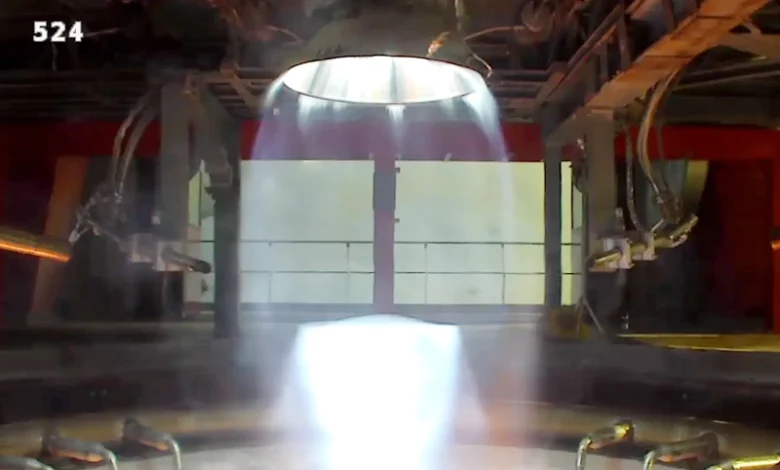
ArianeGroup announced in a 6 November press release that it had completed a series of hot-fire tests of the newest iteration of the Prometheus rocket engine. The tests took place on 29 October at the P5 test bench operated by the German Aerospace Center (DLR) in Lampoldshausen. An ArianeGroup spokesperson told European Spaceflight that the firings add to the maturity of engine operations and were run separately from Themis flight preparations.
An ESA spokesperson added that the operating profile planned for Themis’s first flight had already been tested with the same engine configuration now installed on the demonstrator.
Testing a cheaper combustion chamber
One goal of the October campaign was to validate a new combustion chamber made with a Cold Gas Spray additive manufacturing process. The technique is meant to let engines be built more quickly and at lower cost than with conventional manufacturing.
ArianeGroup also said it is preparing an improved Prometheus variant, designated Mark 2, for an upcoming test campaign. This version is intended to power a later demonstrator, Themis 1E, which is to have upgraded structures and propellant tanks. Those changes should allow longer flights to higher altitudes.
Themis remains grounded
The first flight test is planned for the Esrange Space Centre in Sweden. At an ESA press conference in January 2026, Toni Tolker-Nielsen, then acting Director of Space Transportation, said teams were waiting for spring to carry it out. ESA Director General Josef Aschbacher said the agency was aiming for the first quarter of 2026.
That window passed, as did the rest of the year’s warmer months. With winter returning to northern Sweden, Themis is still on the launch pad, and snow again threatens to halt testing at Esrange.
At an ESA press conference on 22 October, Géraldine Naja, the new Director of Space Transportation, acknowledged it was uncertain whether the first hop could be completed before the end of 2026. She said ArianeGroup and SSC Space, which operates Esrange, would decide by the end of November whether to attempt an inaugural flight this year.
Source: europeanspaceflight.com