


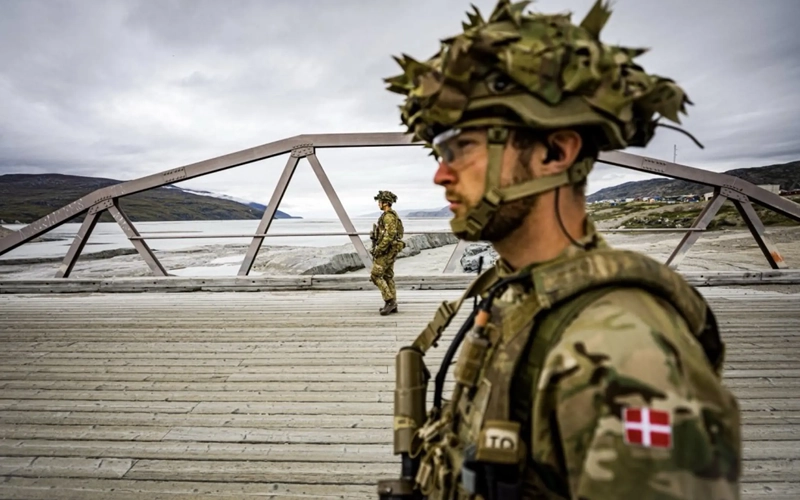
Greenlandic politician Pele Broberg has used a parliamentary question to allege that Danish soldiers are bringing privately owned Starlink terminals into Greenland, even though the territory’s law restricts their use. Greenland’s government says it cannot confirm the claim, but it did acknowledge reports of Starlink terminals being installed at various locations across the island.
The allegation and the government’s reply
Broberg submitted his question on 23 October. He said multiple sources had told him that Danish soldiers were carrying their own Starlink terminals from Denmark and using them for internet access while stationed in Greenland. On that basis, he asked why ordinary Greenlanders should be denied a service that soldiers allegedly use. In his written question, he argued it was hard to see why citizens should not have the same opportunity and standard of connection.
The government published its answer on 5 November. It said it had no information confirming whether Danish soldiers were using private Starlink terminals during deployments. It did note, however, that it was aware of reports of terminals being set up in different parts of the territory.
What the law says
The government pointed to Greenland’s Telecommunications Act, under which using Starlink outside the framework of the state-owned operator Tusass is prohibited. The law contains no mechanism for granting individuals special exemptions.
Asked how it would respond to reports of unauthorised use, the government acknowledged that its enforcement resources are limited. Cases in which a Starlink terminal does not interfere with other lawful radio communications would generally be given lower priority.
A long-running dispute over satellite access
The exchange is the latest step in Broberg’s campaign to let Greenlanders buy satellite internet directly from providers rather than through Tusass. In February 2024, he asked whether the government planned to allow residents to access satellite services without going through the operator. The government rejected the idea then, warning that opening the market to foreign providers could have consequences. It argued that such companies would offer only services that were profitable, and only for as long as that remained economically viable.
On 20 October, three days before submitting his latest questions, Broberg initiated a parliamentary debate on the issue. The government responded by stressing the role of universal service obligations in ensuring that telecommunications services reach all of Greenland. It framed the underlying choice as one between maintaining a public monopoly with uniform prices and universal service obligations, or opening the way to a private foreign monopoly without them.
The claim about soldiers remains unconfirmed. The government’s reply establishes only that unauthorised Starlink use is illegal in Greenland, that reports of installations exist, and that enforcement against non-interfering use is a low priority.
Source: europeanspaceflight.com