


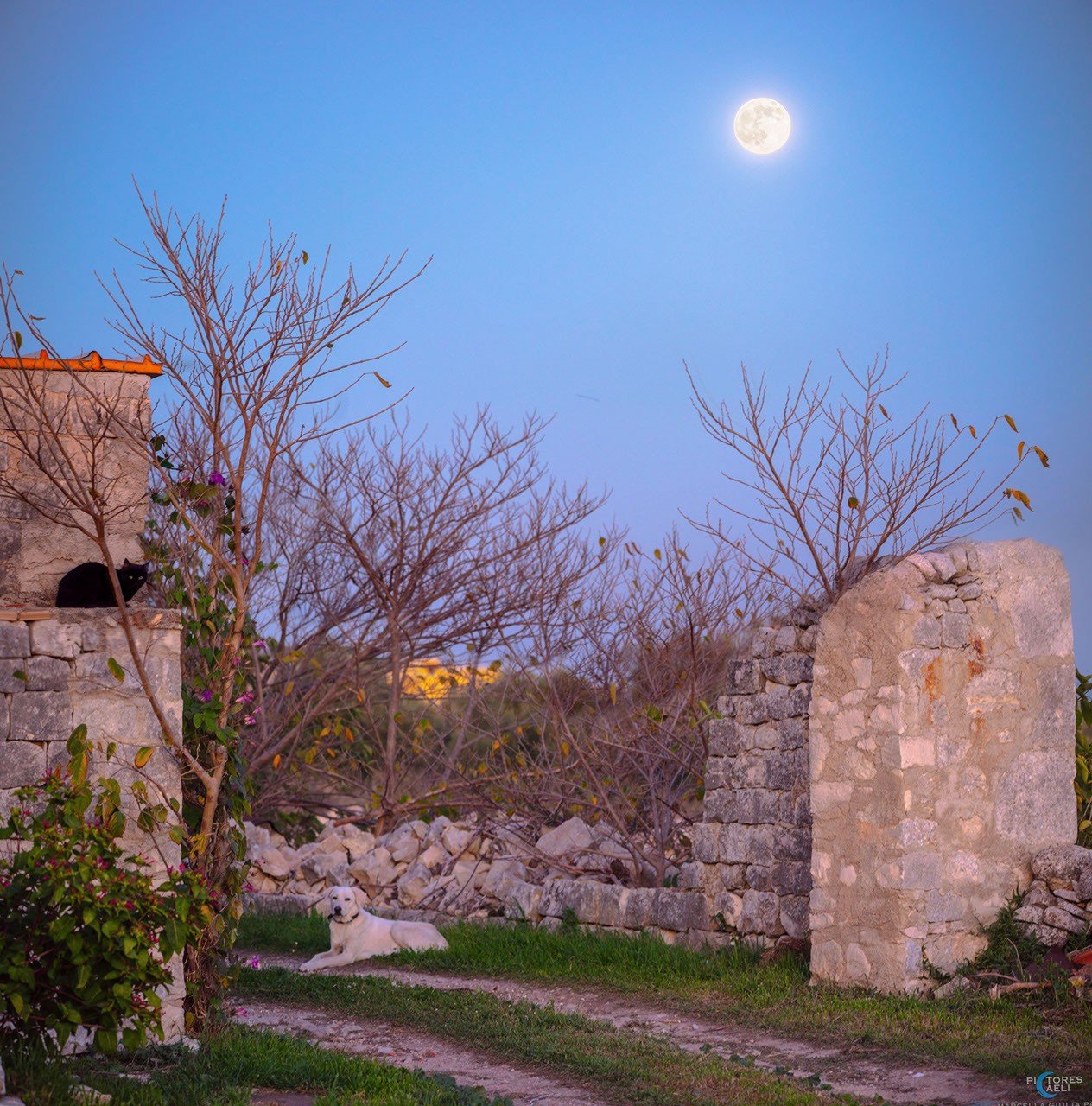
The Full Moon on November 24 rose in the twilight sky as the Sun set, and it was also near perigee, the closest point in its elliptical orbit around Earth. That combination made it a supermoon, one of the biggest and brightest Full Moons of the year.
What made it a supermoon
The Moon’s orbit is not a perfect circle. Its distance from Earth changes over each lunar cycle, and a Full Moon that coincides with perigee looks larger and brighter than one at other points in the orbit. November’s Full Moon, traditionally called the Beaver Moon, met that condition.
Because a Full Moon sits opposite the Sun in the sky, it rises as the Sun sets. That timing let observers around the world watch it climb above the horizon in evening twilight. The image behind this report shows the Moon rising over a rural landscape of fields, fences, backyards and stone walls.
First of four in a row
The November event is the first in a series of four consecutive Full Moons near perigee. The next is the Cold Moon, the traditional name for December’s Full Moon, which rises on December 23. It offers the next opportunity to see a supermoon rise.
Anyone planning to observe it should look toward the horizon shortly after sunset, when the Moon first appears.
Source: science.nasa.gov