
Starship | Starlink Group 31-2 (Starship Flight 15)
Launch SuccessfulSpaceX
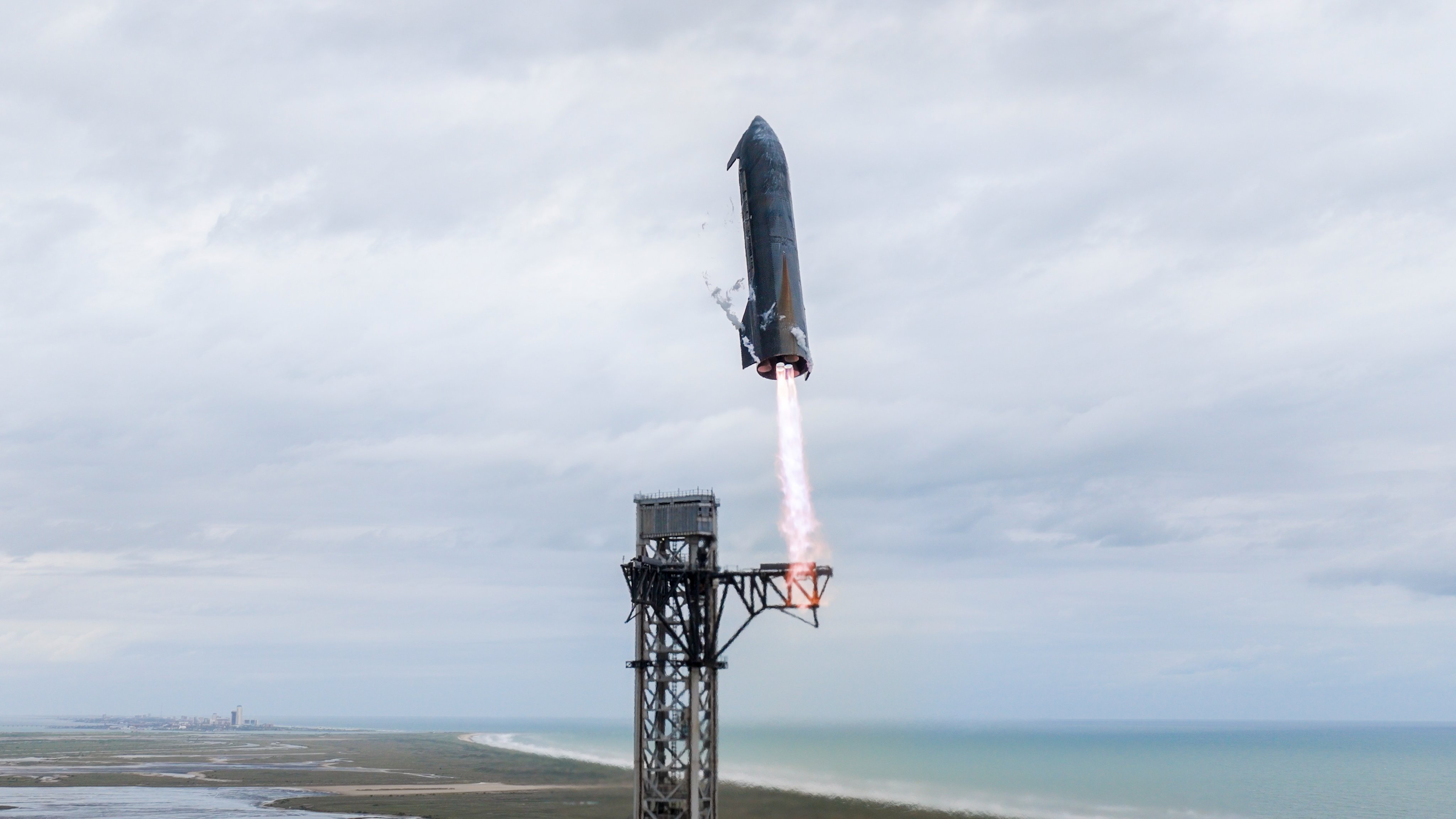
Image: SpaceX · Unknown
Watch the Launch
Launch Agency

SpaceX
Space Exploration Technologies Corp., known as SpaceX, is an American aerospace manufacturer and space transport services company headquartered in Hawthorne, California. It was founded in 2002 by entrepreneur Elon Musk with the goal of reducing space transportation costs and enabling the colonization of Mars. SpaceX operates from many pads, on the East Coast of the US they operate from SLC-40 at Cape Canaveral Space Force Station and historic LC-39A at Kennedy Space Center. They also operate from SLC-4E at Vandenberg Space Force Base, California, usually for polar launches. Another launch site is being developed at Boca Chica, Texas.
- Agency type
- Commercial
- Founded
- 2,002
- Total launches
- 748
- Successful launches
- 733
About the Mission
Starlink Group 31-2 (Starship Flight 15)
15th test flight of the two-stage Starship launch vehicle and 4th flight of Starship V3. Second Starship flight to deploy satellites (a group of Starlink satellites known as Starlink Group 31-2) into stable Low Earth Orbit and first ever to attempt returning the Starship 2nd stage back to the launch site.
The ship is expected to fly at an altitude approximately 275 km above Earth and complete approximately 14 orbits around the planet for more than 22 hours, with the ship expected to attempt returning back to Starbase, Texas on its launch pad by pad arms catching.
The booster’s primary test objective on Flight 15 will be executing a successful launch, ascent, stage separation, boostback burn, and landing by pad arms catching. This will also be the 1st Starship V3 booster to attempt returning to its launch site.
Starship will deliver 26 Starlink V3 satellites to orbit for the second time, which aim to greatly expand the network's capacity and user speeds. Each Starlink V3 satellite will add 1 Tbps of capacity to the constellation. 3 of the satellites have been modified with a suite of cameras to scan Starship’s heatshield and transmit imagery down to operators.
- Mission type
- Communications
- Target orbit
- Low Earth Orbit
Launch Vehicle
Starship V3
Third development version of the Starship reusable two-stage super heavy-lift launch vehicle.
- Manufacturer
- SpaceX
- Height
- 124.40 m
- Diameter
- 9 m
- Maximum stages
- 2
- Liftoff mass
- 5,250 tonnes
- Mass to LEO
- 100,000 kg
- Liftoff thrust
- 80,807 kN
- Launches
- 4
- Successful launches
- 4
- Launch failures
- 0
- Consecutive successes
- 4
- Maiden flight
- 2026-05-22
Launch Updates




Related Programs
SpaceX Starship
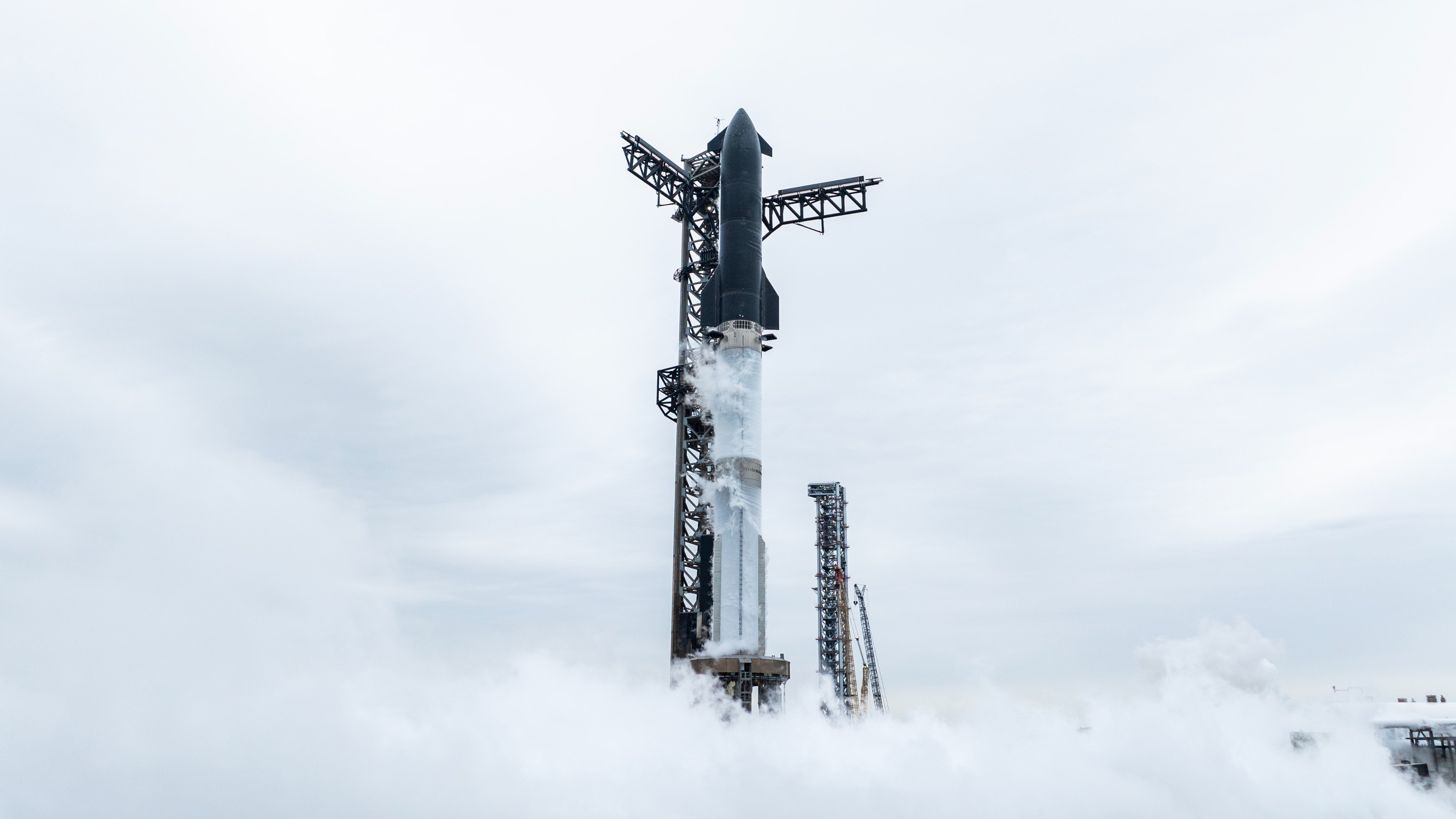
The SpaceX Starship is a fully reusable super heavy-lift launch vehicle under development by SpaceX since 2012, as a self-funded private spaceflight project. The second stage of the Starship — is designed as a long-duration cargo and passenger-carrying spacecraft. It is expected to be initially used without any booster stage at all, as part of an extensive development program to prove out launch-and-landing and iterate on a variety of design details, particularly with respect to the vehicle's atmospheric reentry.
Starlink
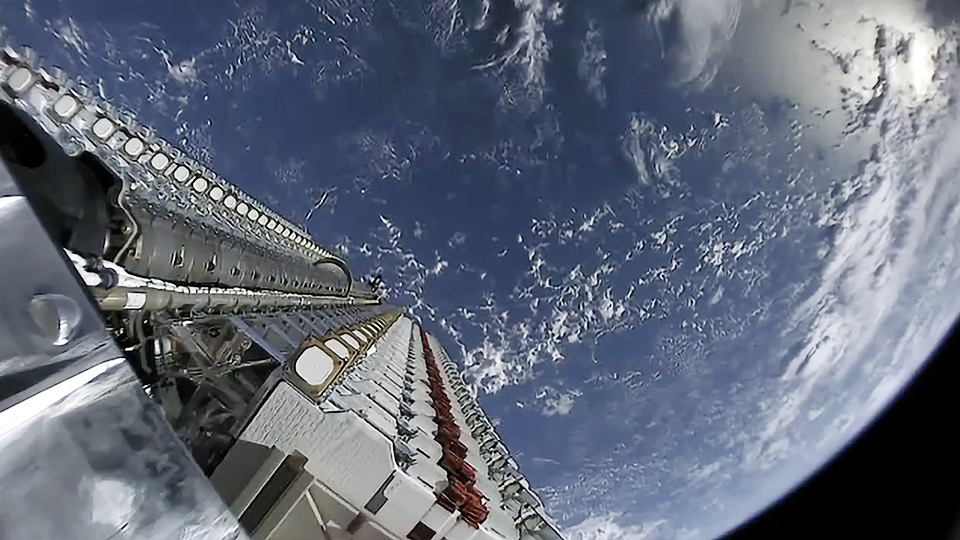
Starlink is a satellite internet constellation operated by American aerospace company SpaceX
Flight Timeline
- T−00:50:00GO for Prop Load
Launch director verifies go for propellant load
- T−00:35:33Stage 1 LOX Load
Start of liquid oxygen loading in the first stage
- T−00:35:30Stage 1 LNG Load
Start of liquid methane loading in the first stage
- T−00:35:12Stage 2 LOX Load
Start of liquid oxygen loading in the second stage
- T−00:35:11Stage 2 LNG Load
Start of liquid methane loading in the second stage
- T−00:21:40Engine Chill
Start of engine chilling
- T−00:02:50Stage 1 Propellant Load Complete
End of propellant loading in the first stage
- T−00:02:10Stage 2 Propellant Load Complete
End of propellant loading in the second stage
- T−00:00:30GO for Launch
Launch director verifies go for launch
- T−00:00:17Flame Deflector Activation
Activation of the flame deflector ahead of engine ignition
- T−00:00:03Ignition
Start of the engine ignition sequence
- T+00:00:00Liftoff
First upwards movement of the rocket
- T+00:00:00Excitement Guaranteed
Excitement guaranteed
- T+00:00:58Max-Q
Maximum dynamic pressure
- T+00:02:19MECO
Cut-off of the main engine
- T+00:02:21Stage 2 Separation
Separation of the second stage from the first
- T+00:02:26Booster Boostback Burn Startup
Start of the booster boostback burn
- T+00:03:02Booster Boostback Burn Shutdown
End of the booster boostback burn
- T+00:06:10Stage 1 Landing Burn
Start of the first stage landing burn
- T+00:06:35Stage 1 Landing
Landing of the first stage
- T+00:08:09SECO-1
First cut-off of the second engine
- T+00:26:10Orbital Insertion Burn Start
The spacecraft ignites it's engines to insert itself into orbit
- T+00:26:30Orbital Insertion Burn End
The spacecraft cuts its engines after inserting itself into orbit
- T+00:35:01Payload Deployment Sequence Start
Start of the payload deployment sequence
- T+01:17:40Payload Deployment Sequence End
End of the payload deployment sequence.
- T+01:27:46Starship Return Check
Check spacecraft health in case an early abort is needed
- T+07:15:35Starship Return Check
Check spacecraft health in case an early abort is needed
- T+20:41:55Starship Return Check
Check spacecraft health in case an early abort is needed
- T+21:35:57Deorbit Burn Start
Start of the ship's deorbit burn
- T+21:36:07Deorbit Burn End
End of the ship's deorbit burn
Launch Site
Orbital Launch Pad 2 · SpaceX Starbase, TX, USA
The second launch and landing pad of the full version of the combined SpaceX Starship and Superheavy booster. To be first used for launch in 2025 with version 3 of Starship and the Superheavy booster.
The launch mount itself is named Orbital Launch Mount B.