


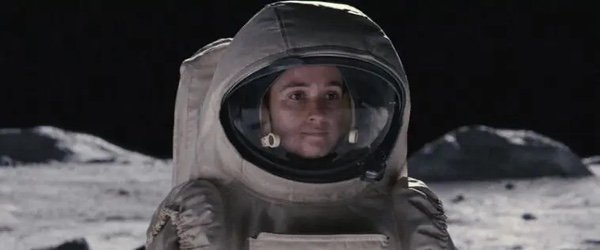
Apple TV’s alternate-history space franchise has a new entry, and one reviewer is not impressed. Star City, a spinoff of For All Mankind that premiered this spring, recasts the same imagined Moon race from inside the Soviet program. In a review published November 23, 2026, in The Space Review, writer Dwayne A. Day describes a bleak, joyless series that undercuts the appeal of the space-exploration story it tells.
A different view of the same alternate history
For All Mankind debuted in late 2019 and imagines a world where the Apollo program continued, leading to a lunar base and eventually crewed missions to Mars. It has run five seasons, and the sixth and final one is due next year. Its first season, ten episodes covering roughly 1969 to 1975, begins with a Soviet Moon landing weeks before Apollo 11, followed by a Soviet woman reaching the lunar surface. That sets off a rivalry between rudimentary American and Soviet outposts near the Moon’s south pole.
Star City begins at the same point, with Alexei Leonov’s Moon walk. Its eight-episode first season covers 1969 to 1971 and is set mainly at the Soviet space complex that shares the show’s name. The story moves from the first Soviet landing to the first woman on the Moon, then to an attempt to establish a lunar base, a Venus mission and the Salyut 1 space station.
Grimdark tone
Day classes the series as “grimdark,” a speculative-fiction subgenre defined by bleak, violent and amoral settings. In his reading, the show treats the Soviet space effort as the work of an authoritarian state that crushes even its most capable people, rather than as a challenging push to extend human presence beyond Earth. He also notes a muted palette of greys, drab greens and washed-out blues.
The central character is Anastasia Belikova, the first woman on the Moon. According to the review, she was not the original choice: the leading female cosmonaut was shot because of a clerical error. After her flight, Belikova is told to undertake a worldwide publicity tour or be replaced by a lookalike who would then be killed. She is under constant surveillance, is used as a propaganda prop in Paris, and is forced into marriage with a fellow cosmonaut who despises her.
Rhys Ifans plays the unnamed Chief Designer. The ensemble also includes the head of security, an assistant, an engineer, the head of cosmonaut training, his wife and a former MiG pilot. Day says that many subplots turn on espionage, blackmail and betrayal, and he sees the influence of The Americans (2013–2018), which he considers better written and more compelling.
The reviewer’s central objection
Day does not dispute that the Soviet state was oppressive. His objection is that the show applies that oppression so uniformly that it becomes tedious. He argues that it is implausible that Soviet engineers never took pride or pleasure in their work or in beating the Americans, and that the series leaves little room for spaceflight as a vocation. He adds that Star City contains little actual spaceflight, and that what it shows usually involves a death.
Day says he kept watching out of professional interest in space history. He also lost enthusiasm for the later seasons of For All Mankind, citing its soap-opera elements and a billionaire space-explorer character he found grating.
Source: www.thespacereview.com