Pakistan’s… wait, I shouldn’t invent details; the original doesn’t name the astronaut’s country. I’ll stick to what is supported. China’s Tiangong station to host its first foreign astronaut within two weeks

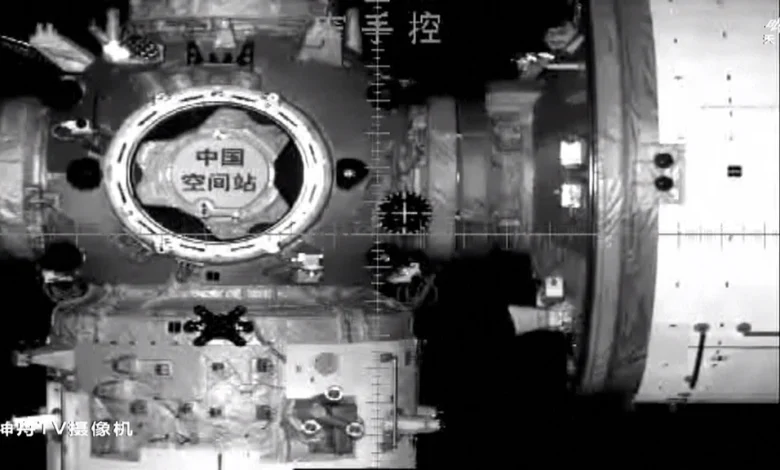
China plans to fly the first foreign astronaut to its Tiangong space station when Shenzhou-24 launches on November 25, 2026. A Pakistani payload specialist will join two Chinese crew members aboard a Long March 2F rocket. The flight will be China’s 18th crewed spaceflight and, according to the China Manned Space Agency (CMSA), the first joint mission in the country’s space program to carry Chinese and foreign astronauts together.
Two candidates, one seat
The CMSA has nominated two candidates from Pakistan’s space agency, SUPARCO (the Space and Upper Atmosphere Research Commission): Muhammad Zeeshan Ali and Khurram Daud. Both will train in China. One will be assigned to the flight and the other will serve as backup.
The crew will rendezvous with the Tianhe core module of Tiangong. The Pakistani astronaut is expected to spend about a week aboard the station before returning to Earth in the Shenzhou-23 spacecraft.
China has typically withheld crew names until the day before launch, and that practice is expected to continue for the two Chinese taikonauts, who will serve as commander and pilot. The Pakistani participation is the exception, since the two candidates are already public. Which of them will fly has not been announced.
How the selection unfolded
The process began in February 2025, when China and Pakistan signed an agreement to train and select Pakistani astronauts for missions to Tiangong. Candidates went through preliminary screening, secondary evaluation and a final selection stage, which concluded in April 2026.
Strategic and regional context
The agreement marks a shift in the relationship between the two countries. Their earlier cooperation centered on terrestrial infrastructure, and it now extends to human spaceflight and joint exploration beyond low Earth orbit.
For Pakistan, the mission would put its first astronaut in space. That would come close to a year ahead of India, whose Gaganyaan program is not expected to launch its first crewed mission before the second quarter of 2027.
For China, the flight is a step toward the kind of international partnerships long associated with NASA and the European Space Agency. It also fits with China’s lunar plans, which are intended to lead to the International Lunar Research Station (ILRS). Opening Tiangong to a foreign astronaut suggests Beijing is now seeking partners for its space program as well as pursuing its own capabilities.
Source: www.universetoday.com