NASA has opened applications for its next class of astronaut candidates, seeking U.S. citizens who could train for work on the lunar surface and for later crewed missions to Mars. Applications are due by 11:59 p.m. EST on Thursday, December 3, through the agency’s online application portal.
The agency says the new recruits will join as the United States returns to the Moon, builds a Moon Base, and lays the groundwork for the first crewed Mars missions. Training will cover operating on the lunar surface and living and working away from Earth.
Selection timeline and previous class
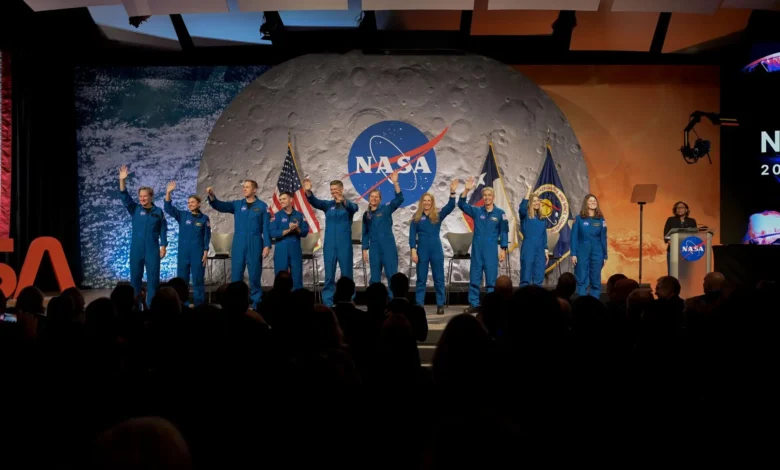
NASA expects to make its final selections in late 2027, when training for the new candidates will begin. The agency last opened recruitment in 2024. More than 8,000 applications came in, and 10 candidates were chosen in 2025. That group is now in nearly two years of training.
Since the 1960s, NASA has selected 370 people for astronaut candidate training. The agency currently has 32 active astronauts. New candidates will train in spacewalking, lunar geology and the handling of high-performance aircraft, among other skills.
NASA Administrator Jared Isaacman said those chosen could walk on the Moon, live and work at the Moon Base, and help develop the systems and operations that will eventually carry crews to Mars. He said such missions will demand technical excellence, sound judgment, teamwork and courage. Deputy Administrator Matt Anderson also encouraged qualified Americans to apply. Scott Tingle, chief of the Astronaut Office and chair of the Astronaut Selection Board at NASA’s Johnson Space Center in Houston, described the role as a chance to join a lineage of explorers and to inspire future scientists and engineers.
Who can apply
Applicants must be U.S. citizens with a master’s degree in a STEM field, such as engineering, biological science, physical science or computer science, from an accredited institution. The degree requirement can also be met in one of three ways:
- Completing at least two years of a doctoral program in a relevant technical field.
- Earning a medical degree, such as a doctor of medicine or osteopathic medicine, or a related qualification such as physician assistant, doctor of nursing practice or family nurse practitioner.
- Completing, or being enrolled in, a nationally recognized test pilot school program that finishes before July 2027. If test pilot school is the applicant’s only advanced technical qualification, a bachelor’s degree in a STEM field is also required.
Candidates also need at least three years of related professional experience after earning the qualifying degree. Pilots can meet this requirement through flight time:
- High-performance jet aircraft: 750 hours as pilot in command.
- Other fixed-wing aircraft: 1,500 total hours, including 750 as pilot in command.
- Rotary-wing aircraft: 1,000 total hours, including 300 as pilot in command.
For physicians, residency time counts toward the experience requirement but must be completed before July 2027. All candidates must pass NASA’s long-duration spaceflight medical exam and show strong leadership, teamwork and communication skills.
Artemis context
NASA plans to send astronauts on increasingly complex missions near the lunar South Pole through its Artemis program. The agency says it intends to establish a lasting human presence on the Moon and prepare for the first crewed Mars mission. Further details on the application process are available in English at go.nasa.gov/astro2026.
Source: www.nasa.gov