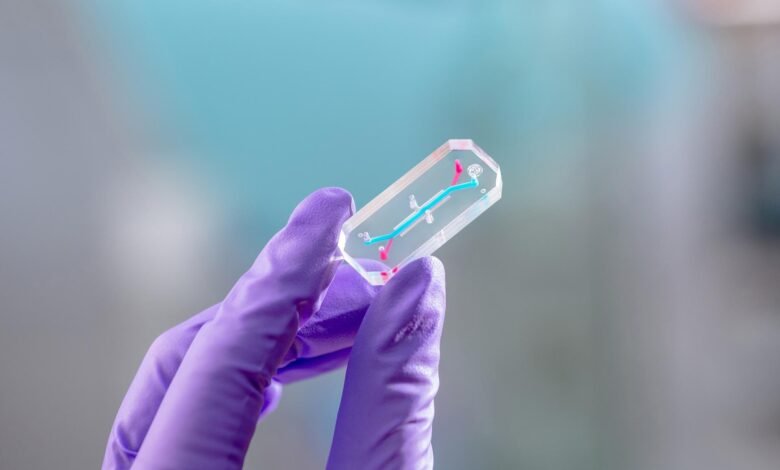
NASA’s Biological and Physical Sciences (BPS) Division is asking researchers to build computational “digital twins” of astronaut bone marrow, using data from organ-on-a-chip devices that flew around the Moon on the Artemis II mission. The BPS Digital AVATAR Challenge offers $150,000 in total prizes for models that predict how individual crew members respond to spaceflight stressors.
From chip to computational model
The challenge builds on AVATAR (A Virtual Astronaut Tissue Analog Response), an investigation that flew aboard Artemis II. The organ-on-a-chip devices were constructed from cells of actual crew members and returned from a 10-day lunar flyby on April 10, 2026. NASA describes AVATAR as the first demonstration of an Artemis astronaut analog that uses an organ-on-a-chip model to generate personalized biological insights. Those insights could inform medical kits and countermeasures for future deep space missions.
The new competition asks participants to create a digital twin of how the AVATAR bone marrow chip responds to spaceflight stressors. A digital twin, in this context, is an individualized computational physiological model that is repeatedly refined with empirical data. These frameworks combine environmental, physiological and multi-omics inputs to simulate and predict how a specific person will respond to the conditions of spaceflight.
What entrants must deliver
Proposed frameworks must process diverse multi-modal datasets. They should pair established computational biology methods with modern digital twin architectures to produce personalized, predictive models of astronaut physiology. NASA expects the systems to model each astronaut’s immune and bone marrow hematopoietic responses and to generate tailored health predictions. These should include comparative analysis that separates effects unique to an individual from those shared across the crew.
Entries must also show a path to continuous model updating as new empirical data become available, reflecting the iterative nature of a true digital twin. Beyond individual health forecasts, the challenge aims to accelerate biological discovery and biochemical and molecular modeling.
Why NASA is pursuing personalized models
The effort sits within the NASA Space Biology Program, which studies how living systems respond across levels of biological organization to the stressors of space exploration. These include microgravity, ionizing radiation, low magnetic fields and elevated CO₂. NASA says that as it prepares for long-duration deep space missions, protecting individual crew members with personalized, data-driven health strategies is becoming more important.
Key dates
Registration opens November 16, 2026, and submissions are due February 12, 2027. The total prize pool is $150,000. Rules, eligibility requirements and registration are available on the challenge page at work.crowdplat.com/challenge/bps-digital-twin-challenge.
Source: www.nasa.gov