


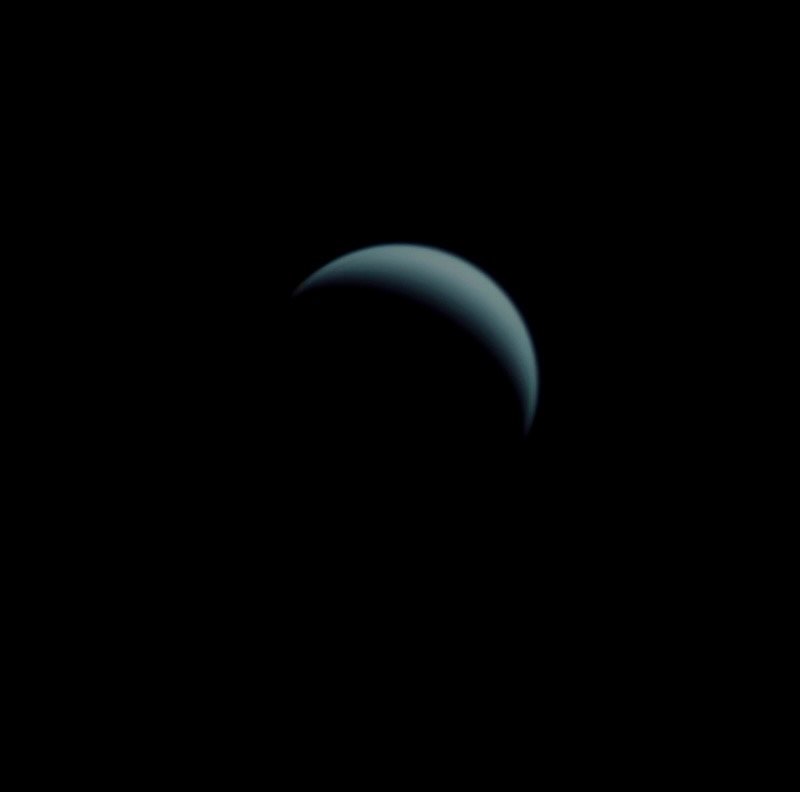
Venus will reach its greatest brilliancy as a morning object on November 29, 2026, at about 14 UTC, when it shines at magnitude -4.4. The planet is already easy to spot in the eastern sky before sunrise. It remains the brightest object in the sky after the sun and moon. Observers worldwide can see it, though the view differs by hemisphere.
Where and when to look
Northern Hemisphere observers have an advantage this month. The ecliptic meets the eastern horizon at a steep angle in the morning, which lifts Venus well above the horizon before dawn. For Southern Hemisphere observers the planet sits lower in the sky, which can give it an unusual appearance near the horizon.
Venus is bright enough that careful observers can pick it out in daylight. Its next comparable showing will not come soon. It will not look this bright in the evening sky until April 2028, or in the morning sky until July 2028.
What puts Venus at peak brilliancy
Venus passed between Earth and the sun at inferior conjunction on October 23-24, 2026. Since then it has been moving ahead of Earth in its smaller, faster orbit. Greatest brilliancy comes about five weeks on either side of inferior conjunction, which places the morning peak on November 29.
The timing reflects a trade-off between two factors: how large Venus appears and how much of its sunlit side faces Earth. At superior conjunction, when Venus lies beyond the sun, as it did on January 6, 2026, we see its disk fully lit. But the planet is then far away and appears small. Near inferior conjunction it is close and its disk is large, but almost all of the lit hemisphere faces away from us.
The balance falls in between. Through a telescope Venus now shows a disk of roughly 40 arcseconds in a crescent phase. It is still close to Earth, and the crescent is widening as more of its day side comes into view. Astronomers sometimes call this peak the planet’s greatest illuminated extent.
Venus does not pass exactly between Earth and the sun at most inferior conjunctions. When it does, the event is a transit of Venus. The next one is not due until December 10-11, 2117.
Compared with the September peak
Venus also had an evening-sky peak on September 18, 2026, about five weeks before inferior conjunction. At magnitude -4.8 it was technically brighter than it will be on November 29. The difference is small enough that most observers would probably not notice it.
From here the phase of Venus will keep growing while its disk shrinks as the planet recedes from Earth. It will gradually fade but will remain the brightest planet in the sky.
Venus next reaches greatest brilliancy in the evening sky in April 2028.
Source: earthsky.org